Skip links

Inside the Work: How We Build and Restore Water Features in Abu Dhabi

Water features look simple from the outside — a fountain flowing cleanly, a wall of water moving quietly in a hotel lobby, a decorative pool that holds its level perfectly day after day.
What sits underneath that clean result is anything but simple.
At Techno Wave General Contracting, water feature installation is one of the more technically demanding scopes we handle. It sits at the intersection of civil works, pipeline installation, mechanical systems, and precise commissioning — all of it has to work together, or the whole feature fails.
This post breaks down what that work actually involves.
What "Water Feature Works" Actually Covers

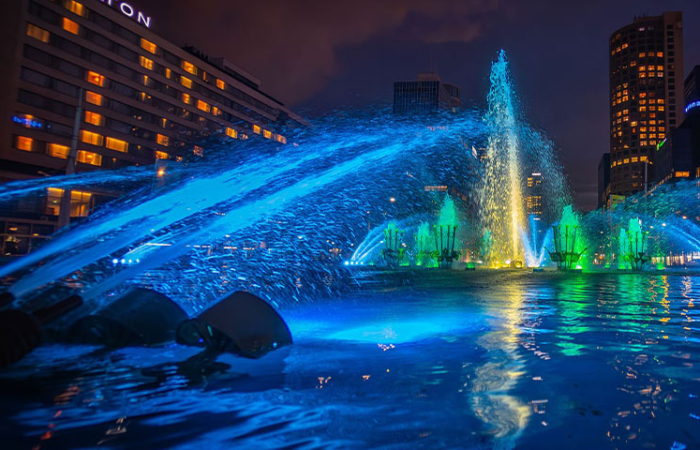
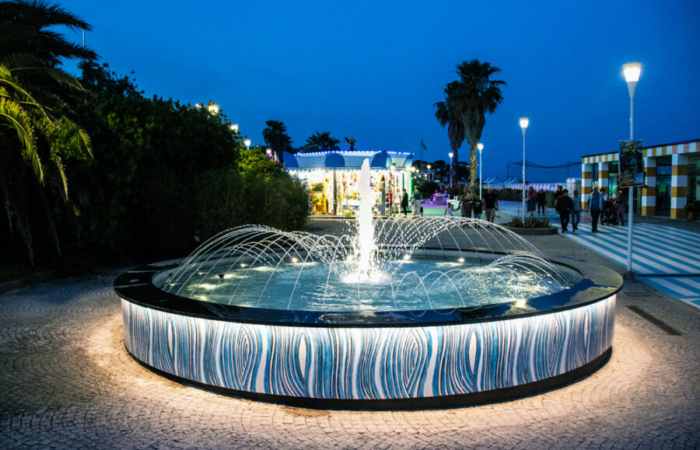
People use the term loosely. From a contractor's perspective, water features in Abu Dhabi typically fall into a few categories, each with its own infrastructure requirements:

  • Decorative fountains — jets, nozzles, lighting, underwater pipework, pump rooms.
  • Water walls and cascades — recirculating systems, hidden tanks, surface waterproofing.
  • Reflecting pools and feature pools — structural waterproofing, balance tanks, filtration and chemical dosing.
  • Landscape water channels — gravity or pump-fed, lining systems, overflow management.

The visible part — the water — is maybe 10% of the job. The rest is underground or hidden in plant rooms.

Phase 1: Civil Groundworks

Every water feature starts with excavation and civil preparation. This is not cosmetic work.
What this involves:

  • Excavating to the correct depth for pipe runs, sumps, and balance tanks
  • Forming concrete bases and walls that carry the structural load of water (water is heavy — 1,000 kg per cubic metre)
  • Installing drainage channels, overflow points, and emergency drain connections
  • Creating the plant room or pump chamber that houses the mechanical equipment


In Abu Dhabi's ground conditions, we often encounter sandy or loose substrates that require proper compaction and sometimes lean concrete blinding before any feature structure goes down. Getting this wrong means settlement cracks in your waterproofing later — a problem that is expensive to fix after the feature is finished and landscaped around.

Phase 2: Pipeline Installation

The pipe network is the circulatory system of the feature. It moves water from the feature basin to the pump, through the filtration system, and back to the outlet points.
Key pipework in a typical water feature installation:

  • Suction lines — from the sump or balance tank to the pump intake
  • Delivery lines — from the pump to the jets, nozzles, or cascade points
  • Return/overflow lines — gravity drainage back to the balance tank
  • Backwash and drain lines — for filter cleaning and full system drainage


Pipe materials we use:

  • HDPE (High-Density Polyethylene) — preferred for underground runs due to its flexibility, corrosion resistance, and long service life
  • uPVC — for above-ground sections and internal pipework
  • Stainless steel — at nozzle connections and visible pipe sections where aesthetics matter


  • All pipe joints in submerged or buried sections are pressure-tested before backfill. Any joint that is not accessible after completion must be proven watertight before it is buried.

Phase 3: Mechanical and Pump Installation

The pump selection is critical. Undersized pumps mean weak flow and poor aesthetics. Oversized pumps mean noise, turbulence, high energy bills, and accelerated wear.
What the mechanical scope covers:

  • Supply and installation of centrifugal or submersible pumps
  • Pump mounting on anti-vibration bases (noise control matters, especially in hotels and commercial spaces)
  • Installation of isolation valves, non-return valves, and strainers before the pump intake
  • Variable speed drives (VSDs) where flow needs to be adjusted for different effects or time-of-day operation
  • Control panels and automation for pump sequencing, fault protection, and timer-based operation


For larger features, we install duty/standby pump arrangements — two pumps, one running, one on standby — so the feature keeps operating if one pump needs maintenance.

Phase 4: Filtration and Water Treatment

A water feature without proper filtration turns green within days in Abu Dhabi's heat. This is one of the most overlooked parts of a water feature installation, and one of the most important for long-term performance.
Filtration system components:

  • Sand filters — removes suspended particles from the water
  • Chemical dosing systems — automated chlorine or salt chlorinator to control algae and bacteria
  • UV sterilisation units — secondary disinfection layer, particularly important in features where water spray creates airborne droplets
  • Skimmers and surface drains — removes floating debris before it reaches the pump


  • The filtration system runs on a separate circuit from the feature circuit in most designs — the pump that runs the filters and the pump that drives the jets are not always the same.

Phase 5: Waterproofing

This is where many water feature installations fail — not immediately, but six to eighteen months after completion.

Waterproofing a water feature is different from waterproofing a roof or a basement. The membrane is permanently submerged. It must tolerate thermal movement, UV exposure at the waterline, chemical exposure from treatment dosing, and physical contact from cleaning equipment.
What we use and why:

  • Cementitious crystalline waterproofing — applied to the structural concrete substrate, penetrates the concrete matrix and becomes part of the structure. Good for feature basins and tanks.
  • Polyurea coatings — spray-applied, fast-curing, highly flexible. Used where movement joints are present or where a coloured finish is required.
  • Fibreglass (GRP) lining — used in some feature pools where a smooth, seamless finish is specified


  • Every waterproofing application is followed by a water test — the basin is filled and monitored for a minimum of 24 to 48 hours before any finishes, tiles, or pebbles are installed on top.

Phase 6: Testing and Commissioning

This is the phase that proves the whole system works as designed. We don't hand over a water feature until the following have been completed and documented:

  • Pressure testing: All pipework pressure-tested to 1.5 times operating pressure and held for a minimum period before sign-off.
  • Flow balancing: Each jet or outlet adjusted to deliver the specified flow rate. In a multi-nozzle fountain, unbalanced flow means some jets shoot high and others trickle — it looks wrong and the client notices immediately.
  • Pump performance verification: Flow rate and pressure at the pump outlet compared against the pump curve to confirm the pump is operating at its duty point — not running on or off the curve.
  • Control system testing: All timers, auto-dosing triggers, fault alarms, and safety cut-outs tested in sequence.
  • Water chemistry baseline: Initial chemical balance established and handed over with a recommended maintenance schedule.
  • References from completed projects of similar scope.

The UAE-Specific Challenges We Deal With

Working in Abu Dhabi adds layers that don't exist in milder climates:

  • Heat: Water temperatures in uncovered features can reach 35–40°C in summer. This accelerates algae growth, increases chemical consumption, reduces pump efficiency, and degrades certain seal and gasket materials. We specify heat-rated components and account for this in chemical dosing design.
  • Sand ingress: Desert dust settles on water surfaces constantly. Filter sizing needs to account for higher-than-normal particulate loads. Skimmer placement matters more here than it would in a covered environment.
  • Water evaporation: Evaporation rates in Abu Dhabi can strip 5–10mm of water per day from an exposed feature surface. Auto-fill systems with float valves or level sensors are not optional — they are necessary to protect pumps from running dry.
  • Saline groundwater: In some areas of Abu Dhabi, groundwater is saline. If your feature has any cracks in the waterproofing, the osmotic pressure from saline groundwater on the outside of the basin can actively force water in — staining finishes and disrupting chemistry. This is why waterproofing quality is non-negotiable.

What Good Workmanship Looks Like Here

Water feature work is a scope where the quality of execution matters more than on most civil jobs. The margins between a feature that runs cleanly for ten years and one that causes problems within the first season are:

  • Pipe joints that are properly fused or mechanically connected — not just pushed together
  • Waterproofing that is applied at the correct thickness, in the correct conditions, to a properly prepared substrate
  • Pumps and valves that are accessible for maintenance — not buried under tiles and pebbles
  • A commissioning record that the client's facilities team can actually use


We document everything — pipe routes, valve locations, pump settings, water chemistry baseline — because the people who install a feature are rarely the same people who maintain it five years later.

Working With Us on Water Feature Projects

Techno Wave General Contracting handles water feature works as part of broader civil and mechanical packages, and as standalone scopes for main contractors and developers. We operate across Abu Dhabi and the wider UAE.

If you have a water feature project at design stage, tender stage, or already under construction and needing a reliable sub-contractor to take on the civil and mechanical works, we are available to review the scope and provide a proposal. Contact us now

Leave a comment

Home
Account
Cart
Search